The Westland Post's “redemption” issue
Our Chemical HeartsThe Westland Post's “redemption” issue is an improvised school newspaper edition assembled under threat of missing a long-unbroken print deadline. Its significance lies both in the collective labor that rescues it and in the way its theme gathers the story’s concerns with remorse, grief, and repair. The issue begins as a stack of unfinished pages; it becomes a space where contributors offer confessions and Grace Town brings Henry Page a piece for editorial consideration.
The unfinished issue and its deadline
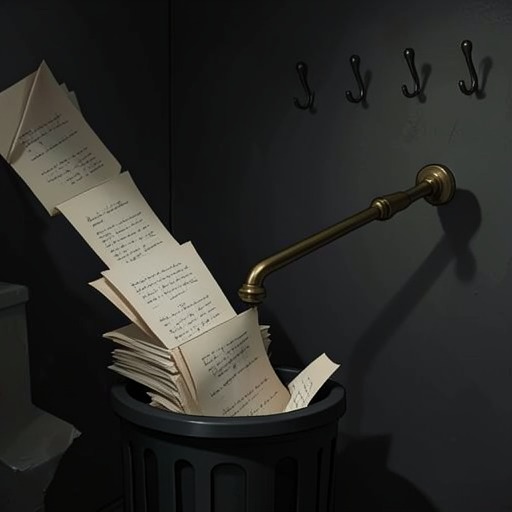
On the first Friday in December, Alistair Hink removes Henry from math class and takes him to Principal Valentine’s office. Lola is already there, with thirty tabloid-sized pages spread out before her, half of them blank. The pages make the problem visible: the newspaper is not merely late in spirit but materially incomplete. Henry has known a meeting was coming, yet has lacked the energy to act. With Grace absent from school for the week after Thanksgiving, he has not been able to make himself enter the newspaper office, despite Lola’s warning that she would bring the problem to Valentine.
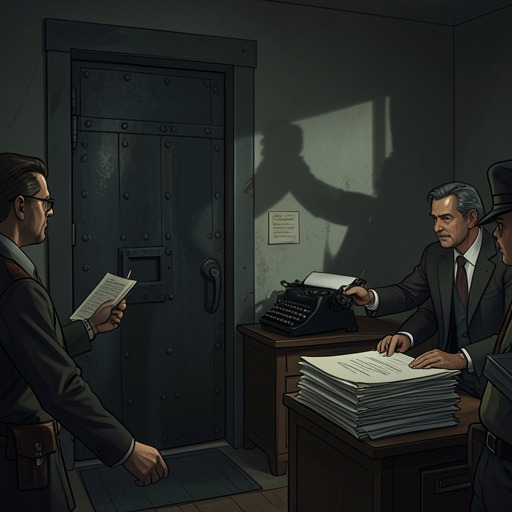
The consequences are immediate. The printing has already been paid for, and Valentine makes clear that the Westland Post has never missed publication in its thirty-five-year history. The issue must go to print on Monday. Though she would otherwise remove Henry from his position, Hink still believes he can assemble something in time. Valentine excuses Henry from class for the rest of the day and orders him to gather the writers and finish the paper. Lola takes him to the office and calls the junior writers’ classrooms. Hink and Valentine supervise the work and initially set “time of your life” as the theme. Henry expects the result to be the worst issue in the paper’s already modest history, but at least sees a possibility of getting it printed.
A new theme and a collective effort
The edition’s theme becomes “redemption” as the rescue effort takes shape. The scale of the task is stark: fourteen people are attempting to do three months of work in two days. The work is organized around a cramped, informal gathering in the newspaper office. Sadie lays out snacks promised in a Facebook post, while Lola and Henry take their places on the office’s sex couch and the others sit cross-legged on the floor with Kit Kats and Mountain Dew. The scene replaces the solitary failure of the blank pages with shared, hurried labor.
The issue’s production depends on more than the usual student writers. By Sunday, junior writers have arrived, followed by Buck and two girls who attended Heslin’s party the previous night; Heslin has encouraged them to join after telling them about the project. Their arrival broadens the group contributing to the paper. The emergency’s compressed timetable gives the work a makeshift character, but the participants’ contributions begin to fill the pages that had been left empty.
Cover, confessions, and the meaning of redemption
Lola’s cover makes Grace Town’s image central to the issue. Using photographs left over from an earlier shoot, she creates a black-and-white picture of a girl against a grayscale universe, with an exploding supernova where the girl’s head should be. The image is traced from Grace, whom Henry recognizes as a ghostly imitation rather than a full likeness. Lola offers to find another model, but Henry approves the design and asks her to print it at tabloid size and put it up for everyone to see. The title, The Westland Redemption, is splashed across the image in orange letters. The cover thus gives the edition a striking visual identity while making absence and imitation part of its emotional texture.
Most of the pages are filled by the time the newcomers arrive, but Lola’s spread of handwritten confessions remains unfinished. The two girls, deeply hungover, welcome the idea: they write down their sins and hand them over, and the group assures them they will be absolved. Redemption therefore appears in the issue not only as an abstract theme but as a practice of disclosing wrongdoing and offering a response to it. The confessions also stand beside the cover’s ghostly portrait of Grace, making the edition’s public language of repair resonate with private histories without claiming that every wound can simply be undone.
Grace Town’s submission
As Henry thinks about kintsukuroi—the repair of broken things with gold seams—his thoughts turn to the ways he and Grace have been damaged. The reflection is interrupted by a message from Grace: she is outside Alistair Hink’s office and has something for the newspaper. Henry reacts with anger and imagines that she will regret her decision, a sharp contrast to the issue’s stated promise of redemption. His bitterness exposes the personal cost beneath his attempt to keep the paper moving.
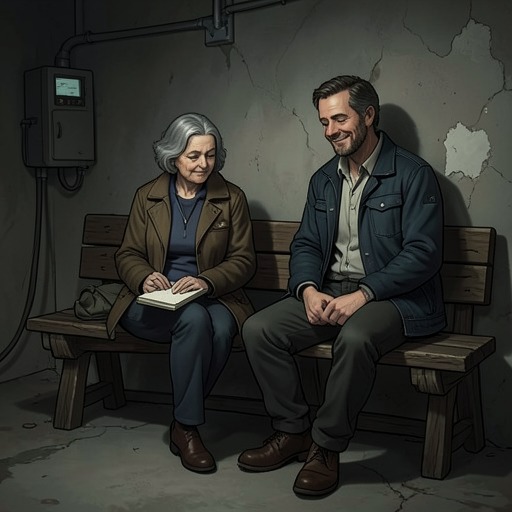
Grace meets Henry on the seat where they had waited after first being called to Hink’s office, making the familiar place feel like both a beginning and an ending. She hands him a small envelope marked “For the consideration of the editor.” She explains that when they started at the newspaper, he had asked why she changed her mind, and that she had known the answer already. She then begins describing how, after Dominic Sawyer died, she expected grief to ease with time and new memories, but waited for the pain and its recurring replays to stop. The supplied passage establishes the envelope as a submission to the redemption issue, but does not establish its complete contents or whether it is ultimately printed. Its arrival nevertheless brings Grace’s account of grief into direct relation with the edition’s theme: the paper’s collective attempt to make something from unfinished pages meets a personal history that cannot be reduced to a simple promise of absolution.